The user will enter Allegro Framework with a username and password. The login credentials, including the target web address, are sent to the email address provided when purchasing the license or registering for the trial version. This can be requested from our website (FREE DEMO link) or directly from the login dialogue by clicking on the Create New Account button.
Once logged in, the user is presented with an interface for working with Allegro applications. The language of this interface is chosen by the user when registering an account and can be changed at any time in the preferences. It is also possible to manage your personal and login data here.
If a free demo account has been created for the user in the past, after a license is purchased, it can then only be redirected to the live database (the data in the demo version is otherwise shared by all those interested in exploring the possibilities offered by Allegro).
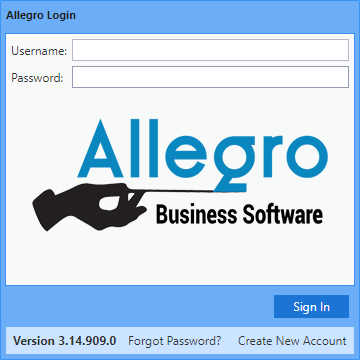
Login screen
After logging in, a temporary secure connection, called a session, is established between the user (their browser) and the web server. It functions as a digital token that the user receives upon logging in and serves to identify them. Each such token has an expiration time set, typically several hours. If a prolonged period of inactivity is detected - meaning the user is not interacting with the applications and therefore no requests are being sent to the server - the connection expires and a message appears. The session is restored upon logging in again.
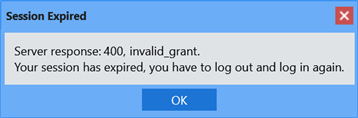
Session expiration notification
